
OSRS Prayer: Chaos Altar vs Gilded Altar Guide
16 October 2026 · 12 min readCompare the Wilderness Chaos Altar and POH Gilded Altar for Prayer training. Learn bone costs, risk, XP rates, and when buying bones is the smart shortcut.
Game screenshots and facts are cited from the Old School RuneScape Wiki (strategy, equipment, drops, and related pages). Writing is original editorial, not a copy of the wiki article.

Contents
- Why Prayer Matters, and How to Skip Early Levels
- Method One: Gilded Altar – Safe, Predictable, and House-Party Friendly
- Method Two: Wilderness Chaos Altar – High Risk, Double Value
- Head-to-Head: Risk, Attention, and Effective XP
- Bone Economics: Cost per XP and When Buying Bones Makes Sense
- Common Mistakes at the Chaos Altar (and How to Avoid Them)
- Alternative Training Methods and Passive Prayer XP
- Practical Next Step: Build Your Prayer Grind Plan
Prayer is one of Old School RuneScape's most impactful combat skills, but training it often feels like a choice between burning cash and risking your bank in the Wilderness. Two altars dominate the meta: the gilded altar in a player-owned house, and the Chaos Temple altar deep in level 11 Wilderness. Both offer up to 350% base experience per bone, but they differ massively in risk, convenience, and effective cost per XP.

This guide breaks down the training methods, requirements, bone economics, common mistakes, and the honest case for spending gold or a boost to skip the grind. We’ll use data from the official OSRS Wiki and give you a clear plan for your next Prayer level.

Why Prayer Matters, and How to Skip Early Levels
Prayer points power overheads like Protect from Melee, Mage, and Range, which are essential for bossing and safe Slayer. Milestones matter: 43 Prayer unlocks all three protection prayers, 70 unlocks Piety after Knight Waves, 77 unlocks Rigour and Augury from Chambers of Xeric scrolls, and 85 is required for all Achievement Diaries. Higher Prayer also means more points restored per potion dose.
Before grinding, knock out quests that grant Prayer XP. The Restless Ghost, Priest in Peril, Recruitment Drive, and Holy Grail give a combined 14,531 XP, taking you from 1 to 30. Spirits of the Elid adds another 8,000 XP but has more requirements. Use these to avoid burying normal bones for hours.
- 43+ Prayer for all protection prayers (quest rewards can get you to 30+).
- For gilded altar: 75 Construction to build the altar (or boost from 67/69 with crystal saw and spicy stew/tea).
- For Chaos Temple: no level requirement, but players should be prepared for Wilderness combat.
- Gold for bones or a service, unless you enjoy lengthy bone-collecting.
Method One: Gilded Altar – Safe, Predictable, and House-Party Friendly
A gilded altar is built in the chapel of a player-owned house at 75 Construction (boostable from 67 with a crystal saw and orange spicy stew, or 69 with tea). When both incense burners are lit with marrentill, it grants 350% Prayer XP per bone. Without burners, it's 250%; with one, 300%. This is the classic safe method: no PKers, no teleblock, just banking and offering.

Here is the experience gained per bone at a gilded altar, depending on burners:
| Bone | Burying XP | No burners (250%) | 1 burner (300%) | 2 burners (350%) |
|---|---|---|---|---|
| Dragon bones | 72 | 180 | 216 | 252 |
| Lava dragon bones | 85 | 212.5 | 255 | 297.5 |
| Superior dragon bones | 150 | 375 | 450 | 525 |
Many players train on designated house party worlds where hosts open gilded altars with both burners. You bring an inventory of bones, use a house teleport, offer each bone on the altar, and repeat. With a servant in your own house, you can unnote bones without banking, but that's a higher-level convenience. The method is click-intensive but zero risk.
Method Two: Wilderness Chaos Altar – High Risk, Double Value
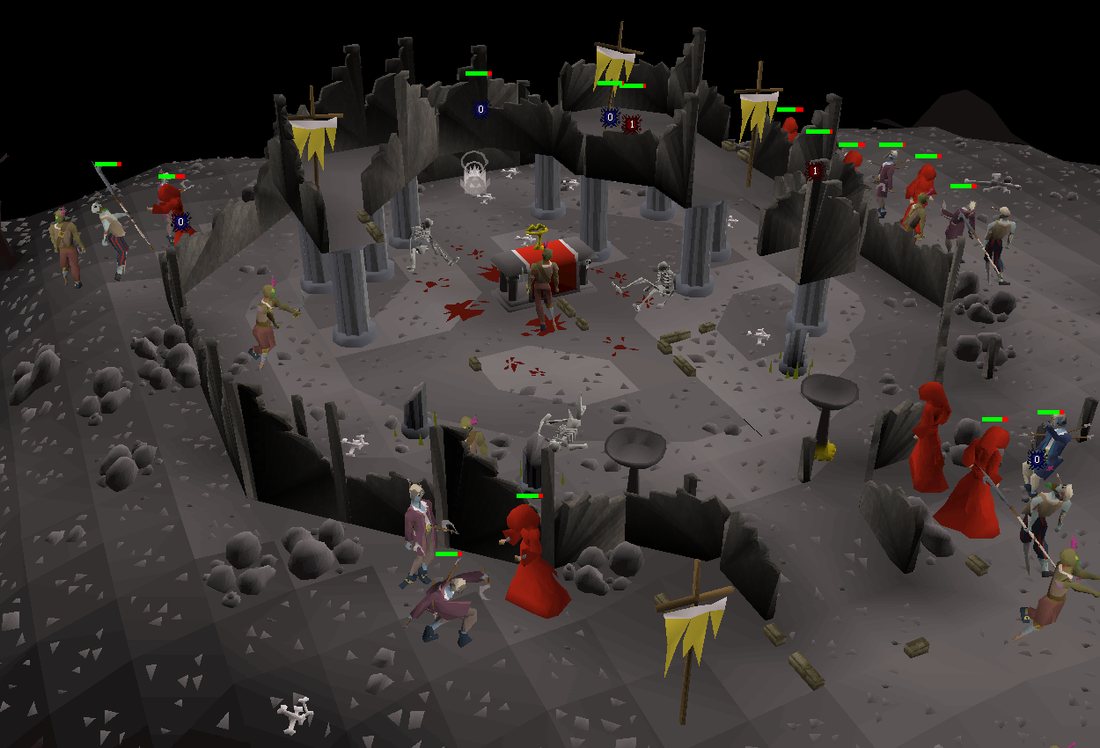
The Chaos Temple sits in level 11–15 Wilderness north of Varrock. Its altar offers the same 350% base XP as a fully lit gilded altar, but with a twist: each bone has a 50% chance of not being consumed. On average, every bone you bring gives two offerings' worth of XP, effectively doubling the XP per bone. A dragon bone that grants 252 XP at a gilded altar averages 504 XP at the Chaos Temple.
Getting there is quick. The burning amulet teleports you to the north entrance in level 15 Wilderness; a ring of dueling to Ferox Enclave and a short run east also works, or you can run north from Varrock. The temple is surrounded by lava that occasionally lobs flaming rocks, and in members' worlds it's full of elder chaos druids who can teleblock and deal heavy damage, plus zombie pirates. Player killers are the real risk.
Two strategies dominate:
- Suicide method: Bring an inventory of bones, offer them, then suicide to the Wine of Zamorak on the table or let the Chaos Fanatic kill you. Respawn at Edgeville or Ferox Enclave (if unlocked), bank, and repeat. You risk only one inventory, but banking is slower.
- Noted bones method: Bring noted bones and use them on the altar; it will unnote and offer one bone per click, allowing huge XP trips without banking. This carries all your wealth in the Wilderness, so only do it with high risk tolerance and ideally with teleport anchoring scrolls to counter druid teleblock.
Head-to-Head: Risk, Attention, and Effective XP
Choosing between the two altars is rarely about raw XP per bone — both start at 350%. The real decision is how much risk you can tolerate and how fast you want to train. The table below compares the core tradeoffs.
| Factor | Gilded Altar | Chaos Altar |
|---|---|---|
| Base XP per bone | 350% with two burners | 350% (same) |
| Bone saving | None | 50% chance to save bone (averages 2x value) |
| Effective XP per dragon bone | 252 XP | ~504 XP average |
| Risk of losing items | None (safe POH) | High (PKers, monsters) |
| Banking frequency | Every inventory (or unnote with servant) | Every inventory (suicide) or rarely (noted) |
| Attention required | Click each bone on altar | Click each bone, plus watch minimap |
| Best for | Low-stress, consistent training | Max value per bone, high-risk players |
If you value your time and have a large cash stack, the chaos altar’s effective doubling can halve your bone costs. But if you get PKed even once, those savings vanish. Many players use a hybrid: gilded altar for relaxed sessions, chaos altar for focused, high-value bone dumps.
Bone Economics: Cost per XP and When Buying Bones Makes Sense
Bone prices fluctuate constantly on the Grand Exchange. Instead of quoting fixed prices, use this formula: cost per XP = bone price ÷ XP per bone. For dragon bones at a gilded altar with two burners, that’s price ÷ 252. At the Chaos Temple with its 50% save, the effective cost per XP is price ÷ 504. Superior dragon bones are more expensive but give more XP per inventory, reducing banking time.
Buying bones with in-game gold is the standard route. If you have less time than gold, purchasing gold from a marketplace — or buying a Prayer training service — is an honest shortcut. Many players calculate their real-world hourly value: if it takes 10+ hours to grind bones you could buy for a few hours of work, the injection of gold saves real time. Just remember to use trusted marketplaces and never share your password; a boost service should only ever ask for in-game assistance, not account credentials.
View live gold rates to see how much a Prayer bankroll would cost today, then compare that against the bone prices on the wiki. This is not a Jagex-endorsed shortcut, but it is a common, legitimate way players fund expensive skills.
Common Mistakes at the Chaos Altar (and How to Avoid Them)
- Forgetting to set respawn point: Default respawn is Lumbridge, wasting minutes per suicide trip. Unlock Edgeville or Ferox Enclave respawn for 5 million coins each, or use a PvP world for a bank chest at spawn.
- Bringing noted bones without escape plan: Noted bones mean you carry a huge stack; if you get teleblocked by druids, you may be stuck. Bring teleport anchoring scrolls from zombie pirates to counter teleblock, and always keep a one-click teleport below level 30 Wilderness.
- Skulling accidentally: Attacking a PKer or a player who attacks you first can skull you, risking all items. Use Protect Item if carrying a valuable bone stack, but avoid skulling and don't bring untradeables you can't afford to lose.
- Ignoring the lava and monsters: Elder chaos druids hit hard and teleport you; the lava rocks deal distraction damage. Keep Hitpoints high or use protection prayers.
- Using high-value bones while undergeared: Bringing superior dragon bones on a suicide method with no defense is fine if you plan to die, but if you're using noted method, wear tank gear like Dinh's bulwark to survive PKers.
Alternative Training Methods and Passive Prayer XP
Gilded and chaos altars aren't the only ways to train Prayer. The Ectofuntus offers 400% XP when offering bonemeal and slime, but is very slow. The Libation Bowl with blessed bone shards and sunfire wine can reach over 1.4M XP/hr at high levels but requires a complex supply chain. Cremating urium remains is relatively slow but unlocks the zealot's robes, a set that gives up to 5% chance to save bones on any method — valuable for long-term cost reduction.
For totally passive XP, equip a bonecrusher or ash sanctifier during Slayer to automatically bury bones or scatter ashes for half XP (full with Morytania/Kourend elite diaries). Reanimating ensouled heads with the Arceuus spellbook also grants Prayer XP during Slayer. These methods won't get you to 99 quickly, but they add up and reduce the amount of expensive altar training you'll need.
If you're committed to the altar grind, full zealot's robes from cremating urium remains can save you millions over the long haul. The robe effect stacks with the chaos altar’s 50% bone save, making each bone even more valuable.
Practical Next Step: Build Your Prayer Grind Plan
- Set a target: 43 for protection prayers, 70 for Piety, 77 for Rigour/Augury, 85 for diaries, or 99 for max. Pick the milestone that matches your PvM goals.
- Quest first: Complete The Restless Ghost, Priest in Peril, Recruitment Drive, Holy Grail, and optionally Spirits of the Elid to skip early levels.
- Choose your altar: If you hate risk, use a gilded altar on a house party world. If you want max value and don't mind dying, use the Chaos Temple suicide method. If you have a massive bone stack and are okay with risk, try noted bones.
- Buy bones: Use the cost-per-XP formula to pick the best bone for your budget. Dragon bones are the sweet spot for most accounts; superior dragon bones are for rich players.
- Consider a boost: If the click intensity or time commitment is too much, a legit boosting service can train Prayer for you. Just as with gold buying, choose a reputable provider and never share your account.
If you want a deeper dive on the Chaos Temple’s suicide vs noted strategies, read our related guide: OSRS Chaos Temple Prayer Training: Suicide vs Safe Noted Bone Strategies.


