
OSRS Runecraft 77–99: GotR into Bloods & Wraths Realistic Guide
18 October 2026 · 12 min readLevel Runecraft from Guardians of the Rift to blood runes and the wrath altar. Requirements, gear setups, profit comparisons, and honest gold-buying shortcuts for 2026.
Game screenshots and facts are cited from the Old School RuneScape Wiki (strategy, equipment, drops, and related pages). Writing is original editorial, not a copy of the wiki article.

Contents
- Who This Guide Is For and Core Requirements
- Why Guardians of the Rift Changes the 2026 Runecraft Meta
- GotR Gear and Inventory Setup
- How a GotR Game Actually Plays
- Rewards, Pearls, and Early Progression Priorities
- Hitting 77: Transitioning to Blood Runes
- Blood Rune Methods Compared
- Realistic Time-to-99 and AFK vs Efficient Tradeoffs
- The Wrath Question at 95+
- Common Mistakes That Drain Your Time and Profit
- Buying Gold or a Boost: The Honest Shortcut
Runecraft sits in a strange spot in Old School RuneScape 2026: it is still one of the slowest skills to max, but the old fear of “lava runes or bust” is gone. Guardians of the Rift gives you a real progression layer from level 27 to 77, and from 77 onward blood runes turn the skill into a profit machine. This guide breaks down the realistic 77–99 path: set up GotR for early levels and raiments, then transition to blood runes—and eventually wraths—once you hit the breakpoint.

We will cover requirements, gear, the minigame loop, profit rates, and where buying gold or a boost honestly fits into the plan.

Who This Guide Is For and Core Requirements
This path is for players who want to train Runecraft from nothing to 99 without living at the Fire Altar. You will start with Guardians of the Rift at 27, pick up the Raiments of the Eye and a colossal pouch, then switch to blood runes at 77. If you already have 77 Runecraft, you can skip to the blood rune sections. For wraths, you will need 95 Runecraft, but we will discuss that after the blood rune setup.
Core requirements before you start:
- Completion of Temple of the Eye quest (requires 10 Runecraft, but you will be boosted to 27 by the quest's XP reward).
- Any pickaxe for mining guardian essence.
- A chisel if you plan to craft guardians.
- Gold or items for stamina/energy potions and basic gear.
- Level 77 Runecraft to begin blood runes.
- For efficient blood rune crafting: 38 Mining and 38 Crafting are needed for dense essence blocks at the Kourend Blood Altar; 62 Firemaking is recommended for the blisterwood abyssal lantern.
Do not sleep on early quest rewards. You can skip almost all of the tedious levels 1–32 by completing the right quests. According to the pay-to-play training page, the sequence of Client of Kourend, X Marks the Spot, The Ascent of Arceuus, Enter the Abyss, Temple of the Eye, and The Eyes of Glouphrie will get you to around level 30+. From there, Guardians of the Rift becomes available and smooths out the rest.
Why Guardians of the Rift Changes the 2026 Runecraft Meta
Before GotR, the standard advice was lava runes from 23 all the way to 99. That method is fast, but it is intensely click-heavy and burns money on binding necklaces, magic imbue, and earth runes. Guardians of the Rift is different: it is a team-based minigame that rewards Runecraft experience based on your level, and it also gives you the Raiments of the Eye outfit, which increases rune output on every future method.

The experience reward is simple: if you earn at least 300 total energy during a game, you get 45 times your Runecraft level in XP when the rift closes. The energy cap is 1,200 per game (1,320 if you use a yew log abyssal lantern). You earn both elemental and catalytic energy by crafting runes inside the minigame, and those same energies convert to points used at the Rewards Guardian.
Unlike traditional runecrafting, GotR does not peel away your profit. You still craft real runes during the game, and the reward chest drops talismans, runes, and unique items like the abyssal lantern and abyssal needle. The minigame is not the absolute fastest XP, but it is far less draining than solo lava runes, and it builds the gear you will use later.
GotR Gear and Inventory Setup
Your first GotR runs will be with whatever you have from the quest. As you accumulate abyssal pearls, you should buy the Raiments of the Eye pieces first. Each piece gives 10% extra runes, and the full set gives 60% extra runes. The hat can be attuned to an elemental or catalytic altar, effectively acting as a talisman while worn, which frees up inventory space.

Essential inventory for a typical GotR game:
- Pickaxe (rune or dragon)
- Chisel (if crafting guardians)
- Essence pouches, starting with the medium pouch from Temple of the Eye and upgrading as you get larger pouches
- Stamina or energy potions (weight-reducing gear helps but is not required)
- Abyssal lantern once obtained, ideally lit with blisterwood logs for an extra 20% blood runes or redwood logs for zero pouch degradation
Do not bring pure essence or talismans into the minigame; they are provided or generated inside. The bank chest sits just outside the portal, so you can restock between games. Official worlds are the best place to find consistent teams, so check the world switcher for the “Guardians of the Rift” label.
How a GotR Game Actually Plays
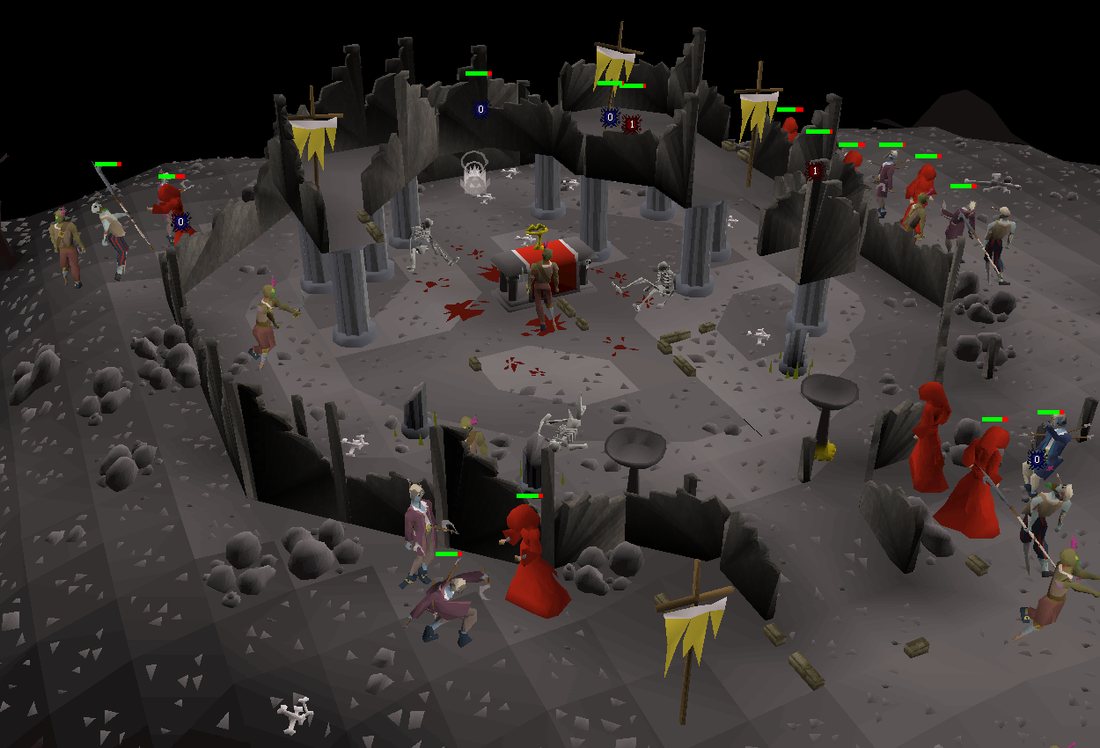
Each game lasts around 8–10 minutes depending on team size and efficiency. After entering the portal, you have a short preparation phase where you mine guardian essence from the rock formations. You then take that essence to the appropriate rune altars inside the temple to craft runes and charge cells. Charging cells creates guardians and barriers that defend the Great Guardian from abyssal creatures.
The fight goes through three broad phases. First, you focus on building early barriers and guardians. Once the abyssal creatures spawn, you split your attention between mining essence, crafting runes, and repairing or building more defenses. At 60% charge, barriers take a burst of damage, so teams usually coordinate to heal them. When the Great Guardian reaches 100%, the rift closes and you receive your XP and points.
One common mistake is splitting your energy between elemental and catalytic randomly. Pick one energy type each game and stick to it, because points are awarded per 100 energy with a chance to round up. Mixed energy often leaves you just short of an extra point in both categories.
Rewards, Pearls, and Early Progression Priorities
After each game, you will have abyssal pearls, elemental or catalytic points, and sometimes unique drops from the Rewards Guardian. Pearls are the main currency for the Temple Supplies shop. The unique rewards include:
- Raiments of the Eye pieces — buy these first; the 60% rune bonus is massive for all future Runecraft training.
- Abyssal lantern — provides a variety of buffs depending on logs: blisterwood for 20% extra blood runes, redwood for no pouch degrade, willow for 5% extra runes, magic for 10% extra runes.
- Abyssal needle — combines all four essence pouches into a colossal pouch (requires 56 Crafting). The colossal pouch holds 40 essence and never degrades when you have the redwood lantern lit.
- Catalytic and elemental talismans — useful for accessing altars elsewhere, but not required for GotR itself.
For most players, the optimal purchase order is full Raiments, then abyssal needle, then abyssal lantern with your preferred log. Do not bother with the ornate or intricate pouches until after those, because the colossal pouch is strictly better and can be re-obtained with a normal needle on the Rewards Guardian if lost.
Hitting 77: Transitioning to Blood Runes
At 77 Runecraft, blood runes unlock at two different altars: the Kourend Blood Altar north of Arceuus and the True Blood Altar accessed through the Abyss. The Kourend altar requires mining dense essence blocks, chipping them, and then crafting at the altar. The Abyss method uses pure essence and the standard Abyss route, which is riskier but significantly faster profit per hour.

Blood essence is an untradeable item that can be activated while crafting blood runes. It gives a 50% chance per essence to produce an extra blood rune, and it lasts for 1,000 extra blood runes before disappearing. This is a huge profit boost and should be used whenever you are doing long blood rune sessions. You can get blood essence from the Blood Altar activities or as a drop in some content; check the wiki for current sources.
Your existing GotR gear helps here. The Raiments of the Eye still give the 60% rune bonus, and the abyssal lantern with blisterwood logs adds another 20% blood runes on top. The colossal pouch from GotR is also your best friend because it holds 40 essence per trip, reducing bank trips.
Blood Rune Methods Compared
The table below uses current money-making guide numbers from the wiki. Profit rates shift with gear, shortcuts, and prices, so always verify on the wiki before committing to a long grind.


| Method | Requirements | Hourly Profit (gp) | Attention / Risk |
|---|---|---|---|
| Abyss blood runes (with blisterwood lantern) | 77 RC, 62 Firemaking, Abyss access | 2,668,096 | High attention, skull risk |
| Abyss blood runes (max setup) | 77 RC, 62 FM, 74/78/93 Agility for shortcuts | 3,391,717 | Medium-high, still risk |
| Arceuus blood runes (minimal) | 77 RC, 38 Mining, 38 Crafting | 689,021 | Low attention, safe |
| Arceuus blood runes (no diary) | Same as above, 73+ recommended | 1,086,509 | Low-medium, safe |
| Arceuus blood runes (max shortcuts) | 77 RC, 38 Mining/Crafting, 73+ Agility | 1,136,195 | Low, but more running |
The Abyss method is clearly the profit king, but it requires you to enter the Wilderness or use the Zamorak Mage teleport with an abyssal bracelet to avoid getting skulled. Arceuus is far safer and still makes solid money, especially if you use daeyalt essence (mined at the Daeyalt mine) for a 50% XP boost on each rune crafted. Daeyalt mining is slow, but for low-attention players it turns blood rune crafting into a very relaxed loop.
Tip: Use the blood essence whenever you craft blood runes for profit. The 50% extra rune chance makes every essence count, and it is consumed slowly enough to cover multiple sessions.
Realistic Time-to-99 and AFK vs Efficient Tradeoffs
Runecraft is never going to be a fast 99 in the traditional sense, but the GotR-into-bloods route flattens the grind into manageable phases. Guardians of the Rift becomes less efficient XP than lava runes at higher levels, but the minigame is far easier to sustain for long sessions, and the outfit is mandatory for profit methods later. If you want max XP per hour, you will still do lava runes or aether runes with runners at 90+, but that requires huge capital and attention.
Blood runes at 77 provide a middle ground: you can click every 30–60 seconds at the Kourend altar for low-effort profit, or you can go full Abyss for higher profit with more risk. The real decision is how much you value your attention. Efficient players can blast through 77–99 with lava runes in a fraction of the time, but many of them burn out before 90. The GotR path keeps you engaged with variety and pays for its own supplies.
We deliberately avoid giving a single “hours to 99” number because it depends on gear, team size, and current XP rates. Check the wiki's pay-to-play training page for up-to-date XP/hour estimates and compare them to your own attention span.
Warning: Do not mix daeyalt essence into the Abyss method unless you know what you are doing. Daeyalt gives bonus XP but is mined slowly, so the overall XP/hour may drop if you mine it yourself. For profit-focused blood runes, use regular pure essence.
The Wrath Question at 95+
At 95 Runecraft, the Wrath Altar becomes available. Wrath runes are used for the highest-level spells and can be very profitable, but the method is not covered in the sources we used for this guide. Because prices and requirements shift, you should verify the current Wrath Altar location, essence requirements, and profit rates on the wiki before planning that section of the 95–99 grind. For many players, simply continuing blood runes to 99 is perfectly acceptable and avoids learning a new loop for only four levels.
Verify on the wiki: Wrath rune crafting details, including the altar location and any quest or diary requirements, are not in our research pack for this article. Check the Runecraft wiki for current info before committing.
Common Mistakes That Drain Your Time and Profit
- Ignoring Raiments of the Eye. The 60% extra rune bonus is the single largest profit increase for blood runes. Do not skip GotR thinking you will save time.
- Using the wrong essence. Rune essence cannot craft blood runes; you must use pure essence or dense essence blocks. Double-check your bank before a long run.
- Not lighting the abyssal lantern. A lantern with the right logs is a free buff. Blisterwood for blood runes, redwood for afk pouch life.
- Forgetting the blood essence. It is like leaving 50% free runes on the table.
- Splitting energy types in GotR. Pick one energy type per game and stick to it; mixed energy often wastes points.
- Using the Abyss without an abyssal bracelet. Getting skulled in the Wilderness is a quick way to lose your pouches and stack.
- Over-mining daeyalt. Daeyalt essence is great for XP, but the mining time cuts into profit. If your goal is gold, use pure essence.
Buying Gold or a Boost: The Honest Shortcut
None of this article is meant to pretend that running GotR 300 times or clicking the Kourend altar for forty hours is fun for everyone. If you value your time more than the grind, buying OSRS gold to fund stamina potions, pure essence, and better gear is a legitimate way to speed up the non-XP parts of training. A Runecraft boost service can also handle the 77–99 grind while you sleep, but that is a personal call. The honest shortcut is to buy gold for supplies, use it to buy the best gear and essence, and then train efficiently rather than AFKing for weeks.
You can check current gold prices on our marketplace and compare the cost of a full blood rune supply stack against the hours you would spend earning it.
Sources
What Runecraft level unlocks blood runes?
Blood runes can be crafted starting at level 77 Runecraft. You can craft them at the Kourend Blood Altar in Arceuus or through the Abyss. The Kourend altar requires 38 Mining and 38 Crafting for dense essence, while the Abyss method only needs pure essence and standard Abyss access.
Is Guardians of the Rift better than lava runes for XP?
No, lava runes are faster XP per hour than Guardians of the Rift, but they require high attention, Magic Imbue, and a constant supply of binding necklaces and earth runes. GotR is more relaxed, gives Raiments of the Eye, and scales XP with your level, making it a sustainable early and mid-game method.
What gear should I get before doing Guardians of the Rift?
At minimum, you need any pickaxe and a chisel if you plan to craft guardians. As you earn abyssal pearls, buy the Raiments of the Eye pieces first for the 60% rune bonus, then the abyssal needle for the colossal pouch, and finally the abyssal lantern with your preferred logs.
How do I get the colossal pouch?
You need the abyssal needle, a reward from the Rewards Guardian in Guardians of the Rift. With 56 Crafting, use the needle on all four essence pouches (small, medium, large, giant) to combine them into the colossal pouch. The colossal pouch holds 40 essence and can be re-obtained with a normal needle if lost.
Can I make money while training Runecraft with blood runes?
Yes, crafting blood runes from level 77 is profitable. The Abyss method can exceed 2.6 million gp per hour with a blisterwood lantern, while the safer Arceuus method still makes around 689k to 1.1 million gp per hour. Profit varies with current rune prices and your gear.
What is the best use for abyssal pearls from GotR?
Spend abyssal pearls on the Raiments of the Eye outfit first. The full set gives 60% extra runes on all future Runecraft training, which pays for itself quickly. After that, prioritize the abyssal needle for the colossal pouch, then the abyssal lantern for its useful buffs.
Do I need to complete Temple of the Eye to play Guardians of the Rift?
Yes, Temple of the Eye is required to enter the minigame. The quest requires 10 Runecraft and rewards experience that typically brings you to level 27, the minimum needed to play GotR. You also need any pickaxe and optionally a chisel.