
OSRS Profitable Ranged Training: Dragons vs Revenants
25 September 2026 · 14 min readA practical OSRS guide to Ranged training that makes money: compare dragons, revenants, Slayer, and chinning by XP and profit per hour, and learn when buying gold is the honest shortcut.
Game screenshots and facts are cited from the Old School RuneScape Wiki (strategy, equipment, drops, and related pages). Writing is original editorial, not a copy of the wiki article.
Contents
- Why profitable ranged training is a smart goal
- Requirements and early level unlocks
- Method comparison: XP vs GP per hour
- Dragons: consistent profit from bones and hides
- Revenants: high-risk, high-reward ranged profit
- Other profitable ranged methods: Slayer and beyond
- Supplies, inventory, and gear for profitable training
- Cost vs time: when buying gold is the honest shortcut
- Common mistakes that destroy your profit
- Practical next step: pick your first profitable grind
Most Ranged guides chase the fastest XP and ignore the bank. This one flips that: we're looking at Ranged training methods that pay for themselves, then stacking them against the power methods that eat your cash stack. Dragons and revenants are the headline money-makers, but they're not the only option. The real skill is knowing when to sacrifice XP for profit, and when to accept a loss for speed.
The tradeoff is simple. Chinning maniacal monkeys can push past 1 million XP per hour with near-max gear, but every hour costs a fortune in chinchompas, prayer potions, and divine ranging potions. Killing green dragons might only give a fraction of that XP, but the bones and hides cover your supplies and then some. If you want to level Ranged without spending your entire bank, this guide shows you where to stand.
Why profitable ranged training is a smart goal
Ranged is one of the most expensive skills to power-level. The fastest methods require chins, cannonballs, high-tier bolts, and constant prayer potions. That's why so many players end up broke at 99 Ranged, then have to grind money for gear anyway. Profitable training doesn't have to be slow, but it does require planning around monster choice, safe spots, and the market value of drops.
The methods in this guide fall into three buckets: consistent profit (dragons, some Slayer tasks), high-risk profit (revenants), and low-cost XP that pairs with profit later. You can mix them. For example, cannon your Slayer tasks to level Ranged passively while the drops cover the cannonballs, then switch to revenants when you want a cash injection.
One important note: exact GP per hour changes with Grand Exchange prices. The wiki's money-making guides and the in-game price checker are your friends. This guide focuses on the mechanics and decision points, not stale numbers.
Requirements and early level unlocks
Before you start, make sure you have these essentials:
- Ranged level 30 and Animal Magnetism completed for Ava's devices — they recover up to 80% of your ammunition and save a fortune over a long grind.
- Dwarf Cannon quest done if you plan to use a dwarf multicannon to speed up Slayer or early training.
- Monkey Madness II started (chapter II access) if you ever want to chin maniacal monkeys for the fastest XP.
- For dragon hunting, you'll need the appropriate anti-dragon protection and usually a safe spot or prayer setup; check each dragon's wiki page for exact requirements.
- For revenants, a high combat level and a plan to escape PKers are strongly recommended.
Early levels can be skipped almost entirely with quest rewards. Completing Shadow of the Storm (put the XP reward on Ranged), Death to the Dorgeshuun, and Horror from the Deep grants enough experience to reach level 32. A further 10,500 XP from Temple of Ikov can push you to 36 if you use the knives-plus-ice-arrows bypass. That's a solid base for any profitable method.
If you'd rather train actively, the dwarf multicannon is the fastest low-level option. It has no Ranged level requirement to use, only the Dwarf Cannon quest, and it hits up to 30 with steel cannonballs regardless of your level. That makes it perfect for clearing out low-level monsters while your actual Ranged level catches up.
Method comparison: XP vs GP per hour
Use this table to find your place on the tradeoff curve. The XP and GP columns are intentionally qualitative because market prices and your gear will shift them. For exact rates, check the wiki pages linked in each row.
| Method | Attention | Ranged XP/hr | GP/hr | Key requirements |
|---|---|---|---|---|
| Questing to skip early levels | Low | Up to level 36 | None (quest rewards) | Shadow of the Storm, Death to the Dorgeshuun, Horror from the Deep, Temple of Ikov bypass |
| Dwarf multicannon at ogres | Medium | ~40k from cannon alone | Negative (cannonballs) | Dwarf Cannon quest; Biohazard for camp ogres |
| Chinning maniacal monkeys | High | 290k–1m+ | Negative (chinchompas, prayer potions) | Monkey Madness II, 45+ Ranged, Rigour/Eagle Eye recommended |
| Slayer with ranged + cannon | Medium | Passive; 2–4m Ranged XP to 99 Slayer | Profit from Slayer drops | Slayer task list, dwarf multicannon |
| Dragons (green/blue/red/black) | Low–Medium | Moderate | Profit from bones & hides | Anti-dragon shield, safe spots, 40+ Ranged recommended |
| Revenants | High | Moderate | High profit (ancient statuettes, bracelets) | Wilderness access, high combat, PK awareness |
Notice the pattern: the fastest methods are money sinks, the money-makers are slower XP. That's okay. A smart trainer banks profit from Slayer and dragons early, then uses that gold to fund a few hours of chinning later.
Dragons: consistent profit from bones and hides
Dragons have been a ranged staple for years because two of their drops are always in demand: dragon bones for Prayer training and dragonhide for Crafting. Green dragons are the entry point, with safe spots in the Wilderness and lower requirements. Blue, red, and black dragons scale up in both difficulty and profit, and the King Black Dragon adds boss-level loot on top of the steady hide and bone income.

Ranged is the natural fit here because dragons have high melee defence but are generally weak to ranged attacks, especially with a crossbow and the right bolts. Safe spots are available for most common dragons — often behind rocks or across water — so you can camp for long trips without eating constantly. Use an anti-dragon shield or the appropriate protection for the dragon's breath, and bring a teleport out if you're in the Wilderness.
The key to profit is banking efficiently. Dragon bones and hides stack, but they're heavy. Use a looting bag in the Wilderness or a nearby bank route. Players with high Agility and a quick teleport can cut trip time dramatically. If you want to combine Slayer, a Black dragon task can be turned into a King Black Dragon trip for better loot without losing the task XP.
Revenants: high-risk, high-reward ranged profit
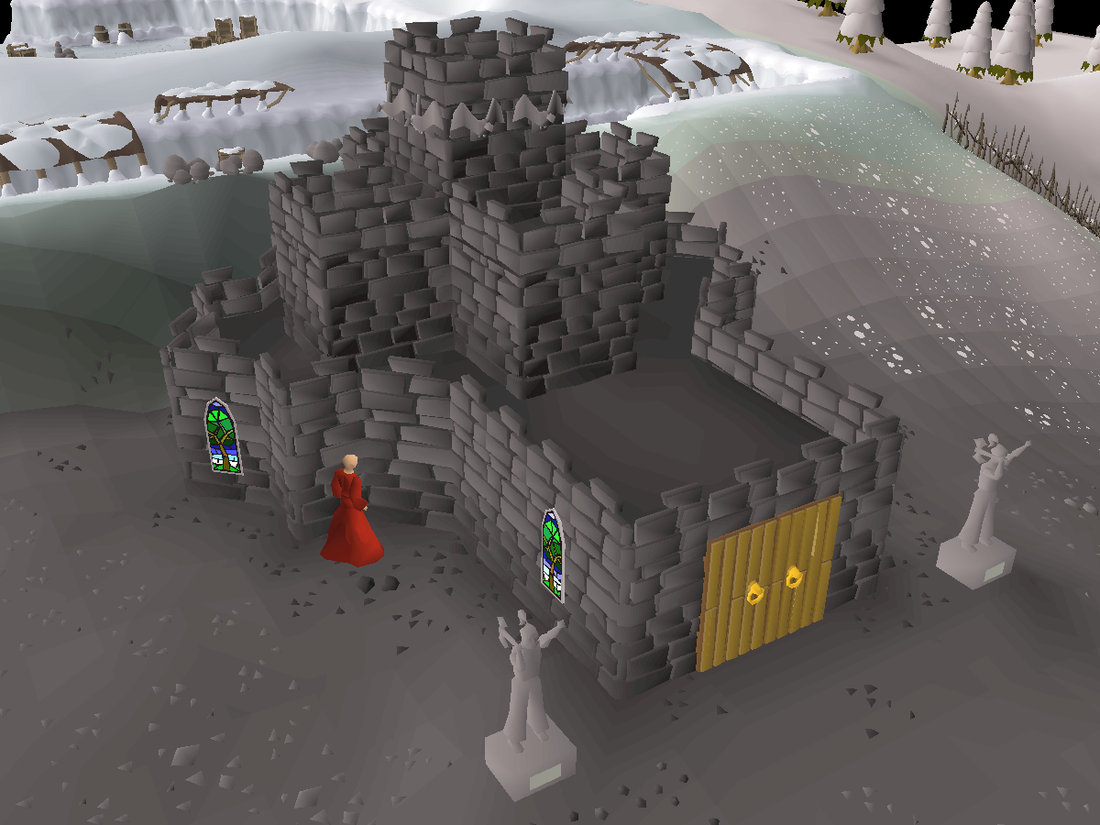
Revenants are the Wildy's answer to the money-making question. They drop ancient statuettes, bracelets, and other stackable artefacts that fetch a premium from collectors and PKers alike. A good hour at revenants can rival some bossing methods, but you have to survive the constant threat of player killers. That risk is the price of admission.
Ranged works well at revenants because you can attack from a distance and keep your escape options open. The revenant dragon, in the deeper caves, is one of the most profitable but also the most contested. Lower-tier revenants like the imp or goblin are safer for learners, though the profit drops accordingly. Always bring a charged bracelet of ethereum, protect item prayer, and a one-click teleport. Your gear should be something you can afford to lose, because you will die eventually.
The XP per hour is not outstanding — comparable to mid-level Slayer — but the GP per hour can fund hours of faster training later. Many players treat revenants as a cash injection: spend a few hours in the caves, bank the profit, then buy chinchompas or cannonballs for a chinning session. If you're comfortable with the Wild, this is the most efficient way to turn Ranged into spending money.
Other profitable ranged methods: Slayer and beyond
Don't sleep on Slayer as a profit engine. Training Slayer with ranged and a dwarf multicannon gives passive Ranged XP through every task, and the Slayer drops — whips, tridents, boots, and alchables — cover your supply costs over time. The research page states players can expect around 2–4 million Ranged XP from level 99 Slayer, which is a nice bonus on top of the Slayer level itself.
In multi-combat areas like dagannoth and kalphite tasks, the cannon does most of the damage while you get nearly as much Ranged XP as you would without one. The cost of steel cannonballs is justified by the time saved; a melee task can take almost twice as long without a cannon. If you can't afford cannonballs, the wiki's advice is blunt: make the money for the cannonballs before training Slayer without one.
Beyond Slayer, other profitable ranged targets exist — brutal black dragons, skeletal wyverns, aviansies, and demonic gorillas all have their fans. Each has specific requirements and drop tables. The wiki's money-making guides sort them by profit and effort; cross-reference with the Ranged training page to see which ones give decent XP as well.
Supplies, inventory, and gear for profitable training
Tip: Ava's devices return 60–80% of your ammunition depending on which tier you own. Never wear a metallic body while using them, or the recovery stops working. If you pick up ammo manually, talk to the Ranged combat tutor to toggle auto-equip on pickup.
Your gear should match the monster's defence. Void Knight equipment with the ranger helm is best against low-defence monsters because of its damage-boosting set effect. Crystal armour or Masori armour are better against higher-defence targets like some dragons and revenants. Elite Void requires the hard Western Provinces diary for the upgrade, which costs 400 Pest Control points per piece — worth it for high-level PvM but not essential for casual profit.
For ammunition, crossbow bolts and darts benefit most from Ava's recovery. If you're on a budget, fletching your own bolts or arrows cuts supply costs. A common low-intensity money-maker for funding ranged supplies is fletching unstrung maple longbows — they sell for a small profit and require almost no attention, perfect for mobile or while watching something.

At maniacal monkeys, the drops include 1-dose prayer potions, which negates the cost of Protect from Melee and offensive prayers. Players with the hard Morytania Diary can use a bonecrusher necklace to restore Prayer instead, which means even fewer potions. But at dragons and revenants, bring your own prayer and food; the profit comes from the drops, not the supplies saved.
Cost vs time: when buying gold is the honest shortcut
Every profitable method has an upfront cost. A dwarf multicannon and a few thousand cannonballs, or a decent crossbow and anti-dragon shield, are not free. If you're starting from zero, grinding 200k for starter gear can feel like a second job. That's where buying OSRS gold becomes an honest time-saver.
Let's be clear: buying gold doesn't make you better at the game, and it won't teach you safe spotting or PK escape routes. But it does let you skip the most boring part — the initial cash grind. If you know you'll enjoy dragon camping or revenant hunting once you have the gear, spending a few dollars to get that gear today is a rational choice. Many high-level players fund alt accounts this way.
The alternative is to self-fund through fletching, Slayer, or low-level money-makers, but that takes hours you could spend actually training Ranged. That time has value. If your goal is to enjoy the content, not to earn the right to enjoy it, then view live gold rates and decide for yourself.
Common mistakes that destroy your profit
Even experienced players fall into these traps. Avoid them and your Ranged training will be both faster and richer.
- Wearing metal armour with Ava's device. The recovery stops working, and you'll waste bolts or arrows all trip.
- Not using the rapid attack style. Rapid gives the highest damage output and fastest XP. For chinchompas, it's called Medium fuse. Longrange is only for training Defence.
- Forgetting anti-dragon protection. Dragon fire can one-shot you if you're not prepared. Always bring the appropriate shield or potion.
- Going to revenants without an escape plan. Know your teleport, protect item, and route out before you enter. Don't bring gear you can't replace.
- Chinning without prayer potions or a bonecrusher necklace. You'll spend more time banking than throwing chins, and your XP/hr will crater.
- Cannoning in single-combat areas. The cannon only shines in multi-combat where it hits multiple targets. Pick your spot.
Practical next step: pick your first profitable grind
You don't need to choose one method forever. A sensible path for a new account looks like this: quest to 32–36 Ranged, complete Animal Magnetism and Dwarf Cannon, cannon a few Slayer tasks to build a small bank, then camp green dragons or revenants until you can afford a blowpipe or better crossbow. From there, mix Slayer, dragons, and occasional chinning sessions to push toward 80s and 90s.
The real secret is that profitable training is a mindset. Every hour you spend killing dragons or revenants not only levels your Ranged but also funds the faster methods later. You're never wasting time if the drops pay for your next upgrade.
Want to skip the early money grind entirely? View live gold rates and start your profitable ranged journey with a real gear setup instead of a bronze crossbow.
Sources
What is the fastest profitable Ranged training method in OSRS?
There is no single fastest profitable method because profit and speed trade off. Revenants offer high profit with moderate XP, while Slayer with a cannon gives steady profit and passive Ranged XP over many tasks. Chinning maniacal monkeys is fastest XP but costs money. The best choice depends on your goals and risk tolerance.
Are revenants worth it for Ranged training?
Revenants are worth it if you can handle Wilderness PK risk. Their ancient statuette and bracelet drops provide excellent GP per hour, which can fund faster training later. XP is moderate, similar to mid-level Slayer. Bring budget gear, protect item, and a one-click teleport. They are best as a cash injection rather than a primary training location.
Which dragons are best for making money with Ranged?
Green dragons are the easiest entry point with safe spots and low requirements. Blue and red dragons offer higher profit with more risk, while black dragons and the King Black Dragon add valuable unique drops. All dragons provide dragon bones and hides, which are always in demand. Choose based on your combat level and willingness to enter the Wilderness.
Can I train Ranged at low levels while making profit?
Yes, low-level players can camp green dragons with a safe spot and an anti-dragon shield once they have around 40 Ranged and 37 Prayer for Protect from Magic. The bones and hides cover supplies and generate profit. Questing to 32–36 Ranged first saves time, and completing Animal Magnetism for Ava's devices cuts ammunition costs significantly.
Is chinning maniacal monkeys profitable?
No, chinning maniacal monkeys is a major money sink. You spend large sums on chinchompas, prayer potions, and divine ranging potions for the fastest Ranged XP in the game, up to over 1 million XP per hour at high levels. It is only worth doing if you have funds from profitable methods like dragons or revenants, or if you buy gold to cover the cost.
What gear should I use for profitable Ranged training?
For dragons, a crossbow with anti-dragon protection and the best ranged armour you can afford works well. At revenants, use budget gear you can lose, a bracelet of ethereum, and protect item. For Slayer, pair a ranged weapon with a dwarf multicannon. Ava's devices are essential for ammo recovery; use Void Knight equipment against low-defence monsters and crystal or Masori against high defence.
Should I buy gold to fund Ranged training supplies?
Buying gold is a legitimate time-saving choice if you value your time more than grinding for starting capital. It lets you skip the initial cash grind for cannonballs, chins, or better gear. However, it won't teach safe spotting or PK escapes. Many players use bought gold to fund alt accounts or jump straight into profitable methods like revenants and dragon bossing.